



Why Polyurethane Screed Works Best in Food Factories.
When people ask me why polyurethane screed is so common in food factories, I usually answer from site experience, not specs. I’ve worked in dairies, meat plants, bakeries, bottling halls, and kitchens where hot washdowns, acids, fats, sugars, and constant pallet traffic all hit the floor at the same time. Standard epoxy just doesn’t last in those conditions. It softens with heat, stains easily, and once moisture gets underneath, it starts debonding. Polyurethane screed was developed for exactly this kind of abuse. It’s not fancy or decorative. It’s just tough, practical, and dependable when everything else struggles.
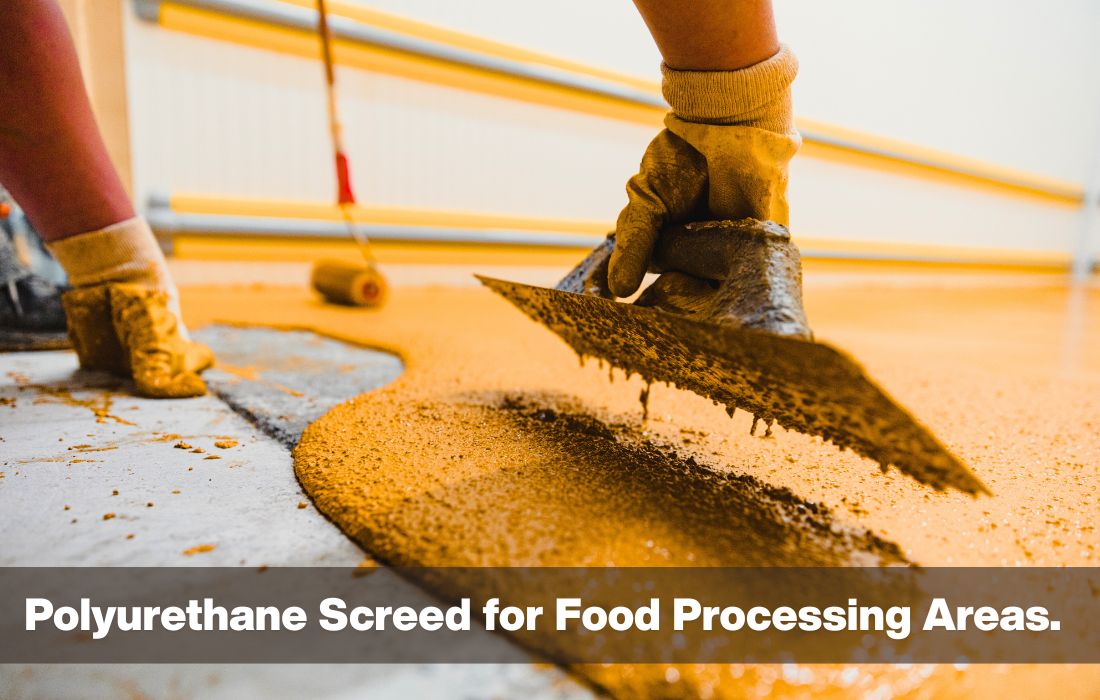
From a technical side, it’s a heavy duty, trowel applied system, usually 4 to 9 mm thick, made from polyurethane resin, cement, and graded aggregates. That cement component is what gives it thermal stability and moisture tolerance. On real projects, this means we can install on damp or even green concrete instead of waiting months for drying. It also means the floor can handle thermal shock. I’ve seen these floors take boiling water washdowns followed by cold rinses without cracking, curling, or popping off. Try that with epoxy and you’ll be chasing blisters and joint failures within a short time.
Slip resistance and hygiene are other big reasons food processors rely on this system. In wet areas, smooth floors turn into skating rinks, so with polyurethane screed we control the surface texture using different aggregate sizes. Rougher in raw processing zones, medium in packing areas, smoother in dry spaces. The trick is getting that balance between safety and cleanability. Too rough and cleaning becomes a nightmare. Too smooth and people slip. With proper detailing like coved skirtings, sealed joints, and good drainage falls, you end up with a seamless floor that doesn’t trap dirt or water and stays audit friendly year after year.
Cost wise, polyurethane screed isn’t the cheapest upfront option, but on lifecycle cost it usually wins by a long way. I’ve seen epoxy and tiled systems replaced every few years in hot washdown zones, while polyurethane screed floors keep performing for 10 to 15 years or more with only minor repairs. That’s why I recommend it. Not because it looks good on paper, but because I’ve watched it survive heat, moisture, chemicals, impact, and nonstop cleaning where other systems fail. In food environments, reliability beats everything else.
So if you’re looking at flooring for a food processing area and want something that actually holds up in real operating conditions, polyurethane screed is usually the safest bet. From what I’ve seen on site, it handles heat, moisture, chemicals, and heavy traffic without constant repairs or downtime. Just as important, make sure it’s installed by an approved, experienced applicator, because surface prep, mixing, and detailing make or break these systems. Done right, you install once, stay compliant, and don’t worry about the floor again for a long time.
Let me know your thought, exprience in the comment section.
Contact details : www.linkedin.com/in/sanjay-sadanandan , sanjay@aaa-ron.com +968 91145302.