



Self-Leveling Cement Floors Explained in Simple Terms.
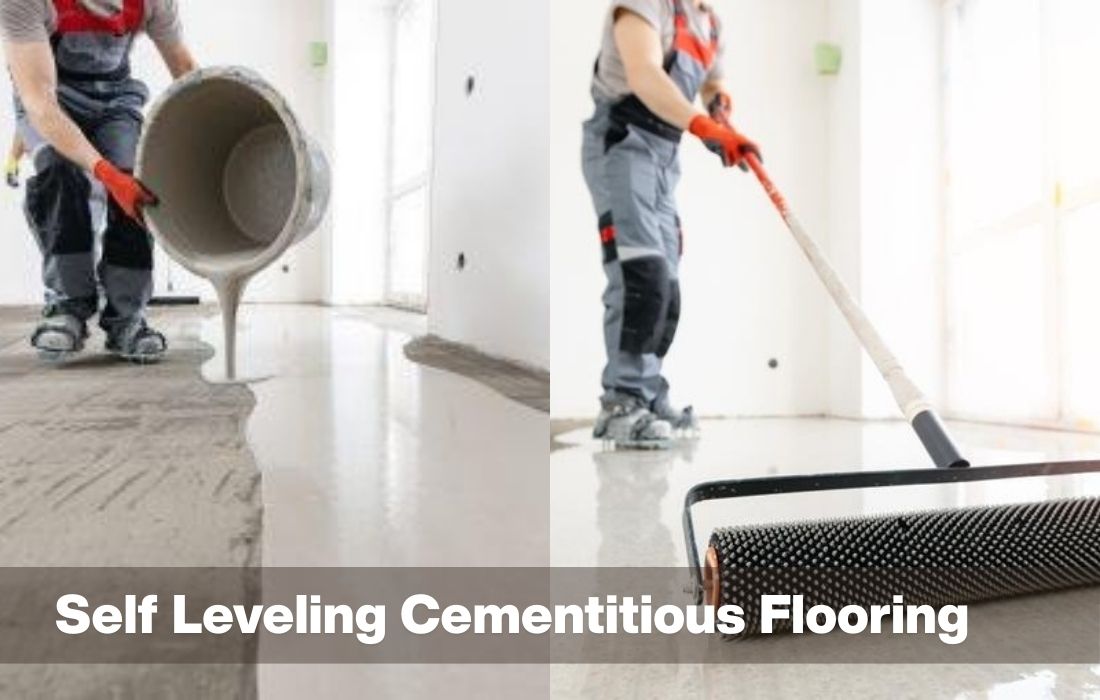
When I first started working with self leveling cementitious flooring, I honestly thought it was just another “easy fix” product. But after using it across warehouses, hospitals, offices, retail spaces, and even residential projects, I realized it’s one of the most practical tools we have for getting perfectly flat, durable floors without ripping everything out. In simple terms, this material is a cement based compound that flows like thick milkshake when mixed properly. You pour it on the floor, guide it lightly, and gravity does the rest. It finds low spots, fills dips, and creates a smooth, level surface that’s ready for tiles, vinyl, epoxy, or even polished finishes.
From my experience, surface preparation is where most jobs succeed or fail. No matter how good the product is, if the substrate is dusty, oily, cracked, or weak, the self leveling layer will not bond properly. I always start by grinding or shot blasting the surface, vacuuming thoroughly, and applying the right primer recommended by the manufacturer. This primer controls absorption and improves adhesion. On porous concrete, skipping primer almost always leads to pinholes, bubbles, or weak spots. Once the surface is ready, mixing becomes critical. Too much water makes the material weak and prone to cracking. Too little water makes it thick and hard to flow. I stick strictly to the data sheet and use a mechanical mixer to get a smooth, lump free consistency.
Application is where self leveling cement really shines. Once poured, it spreads naturally and levels itself, but it still needs light help with a gauge rake or smoothing trowel to push it into corners and control thickness. I also use a spiked roller to release trapped air and avoid surface bubbles. Depending on the product, thickness can range from feather edge up to 30 mm or more in one pour. For deeper repairs, I usually build it up in layers rather than forcing one thick application. The beauty of these systems is fast setting. Many floors can be walked on within 2 to 4 hours and finished with tiles or coatings within 24 hours. On commercial projects, this fast turnaround saves serious downtime costs.
In terms of performance, self leveling cementitious floors deliver both strength and smoothness. Once cured, they create a dense, hard wearing surface with excellent compressive strength and abrasion resistance. That makes them ideal under epoxy coatings in factories, vinyl flooring in hospitals, and large format tiles in malls and offices. I’ve also used them as final wear surfaces in utility rooms and storage areas when sealed properly. Another advantage I’ve seen over the years is compatibility. These products bond well to concrete, screeds, old tiles, and even heated floor systems when the correct primers are used.
What I like most about self leveling cementitious flooring is how predictable and controllable it becomes once you understand the basics. You get consistent thickness, minimal shrinkage, and excellent surface flatness compared to traditional sand cement screeds. It also reduces labor fatigue because you’re not hand troweling large areas for hours. On large commercial floors, the speed and finish quality make it one of the most cost effective leveling solutions available. From my field experience, when installed correctly, these floors stay stable, crack resistant, and serviceable for many years with minimal maintenance.
After working with self leveling cementitious flooring across many projects, I see it as one of the smartest solutions for modern construction and renovation. It delivers speed, accuracy, and durability while keeping labor effort low and finish quality high. When surface prep, mixing, and application are done right, it creates a strong, smooth base that improves the performance and lifespan of any flooring system installed on top of it. For anyone dealing with uneven slabs, damaged concrete, or tight project timelines, this system is a reliable and proven choice.
Let me know your thought, exprience in the comment section.
Contact details : www.linkedin.com/in/sanjay-sadanandan , sanjay@aaa-ron.com +968 91145302.